
Fattmerchant
Payment processing platform for small and mid-market businesses that combines subscription pricing, interchange-plus rates, integrated point-of-sale and online checkout tools, and developer APIs. Suited for retailers, restaurants, SaaS platforms, and any business that needs predictable processor fees plus integration options.
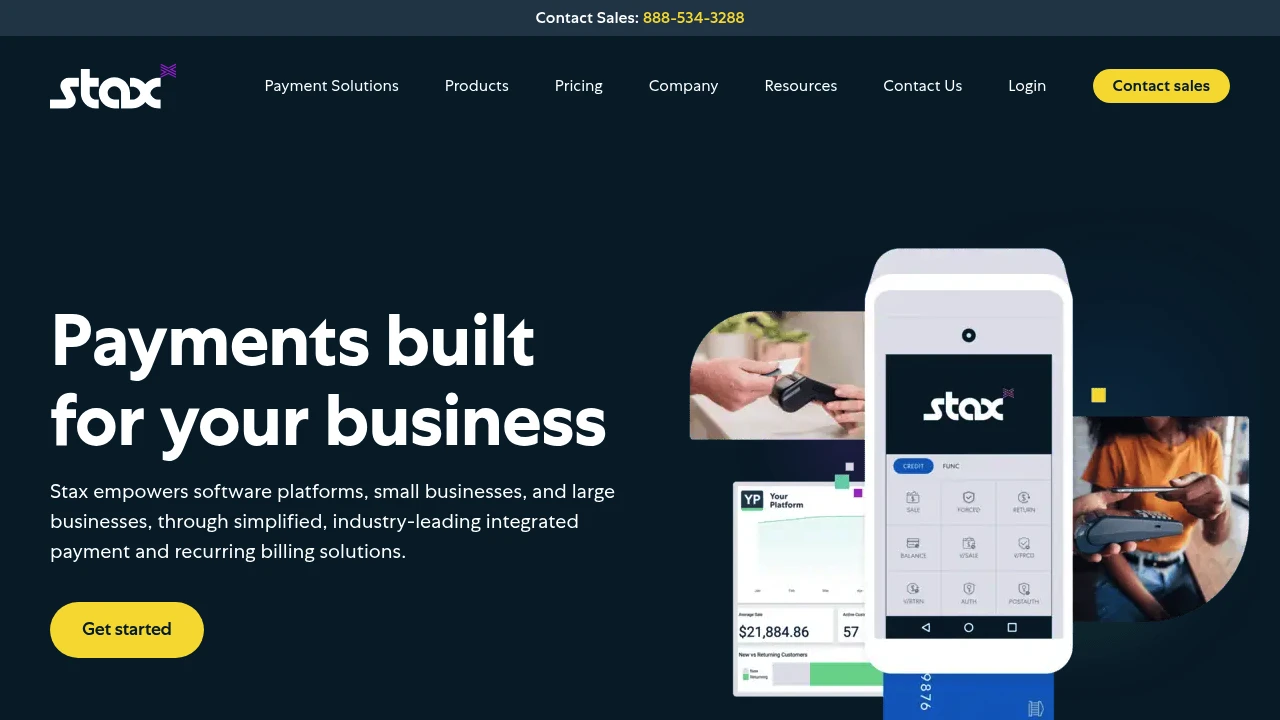
What is fattmerchant
Fattmerchant is a payment processing platform that provides subscription-style pricing combined with interchange-plus pricing, integrated point-of-sale and online payment tools, and developer-facing APIs. The platform is positioned for businesses that need transparent processing costs and the ability to integrate payments into custom or off-the-shelf systems. Fattmerchant supports in-person, online, and recurring billing workflows and offers merchant services such as chargeback management and detailed reporting.
Fattmerchant targets a range of customers from single-location retailers to multi-location franchises and software providers that need embedded payments. The product mix includes hardware options for countertop and mobile acceptance, hosted checkout pages for web stores, and tokenization to reduce PCI scope. The company also provides onboarding and account management services for higher-volume merchants.
The platform’s architecture is oriented toward developers and operations teams: it exposes APIs and webhooks for payments, subscriptions, customer and payment method management, and reconciliation. For non-technical users there are dashboard controls, reporting exports, and integrations for popular commerce and accounting systems.
Fattmerchant features
What does fattmerchant do?
Fattmerchant processes card and ACH payments for businesses while offering predictable monthly pricing and detailed transaction-level reporting. It accepts in-person, card-not-present, and recurring payments and supports tokenization to securely store customer card data for future charges. The platform provides point-of-sale hardware options, hosted payment pages, and integrations with major e-commerce and accounting platforms.
The platform includes subscription billing and invoicing features that let merchants create recurring plans, apply proration, and manage failed payments with retry logic. For reporting and reconciliation, Fattmerchant supplies downloadable transaction exports, settle reports, and dashboards that break down interchange, markup, and fees by transaction type. The dashboard also includes dispute and chargeback tracking tools to help merchants manage contested transactions.
On the operations side, Fattmerchant offers developer APIs for creating and managing customers, payment methods, and transactions, plus webhooks for real-time event notifications. There are also SDKs and example integrations for common stacks, which reduce integration time for web and mobile applications.
Key feature areas include:
- Payments acceptance: EMV chip, magstripe, contactless/NFC, and manually keyed transactions for in-person and remote sales.
- Recurring billing: subscription plans, billing cycles, automatic retries, and dunning tools.
- Developer tools: REST APIs, webhooks, SDKs, and sandbox testing environments.
- Reporting and reconciliation: transaction-level reporting, exports, and settlement details.
- Integrations and connectors: pre-built connections for e-commerce platforms, POS systems, and accounting software.
Fattmerchant pricing
Fattmerchant offers these pricing plans:
- Free Plan: $0/month with access to limited reporting and a pay-as-you-go rate structure suitable for very low volume or trial use; hardware and integration costs still apply.
- Starter: $99/month subscription plus interchange fees and a small processing markup. This tier is aimed at small businesses that want predictable monthly costs and basic support.
- Professional: $199/month subscription plus interchange fees. Includes additional features such as enhanced reporting, priority support, and reduced per-transaction markup compared with the Starter plan.
- Enterprise: Custom pricing. Designed for high-volume merchants and platforms; this tier includes volume discounts, dedicated account management, custom integrations, and SLA options.
When billed annually these plans reflect equivalent yearly amounts: $99/month becomes $1,188/year for the Starter plan and $199/month becomes $2,388/year for the Professional plan. Many merchants pay interchange-plus rates in addition to the subscription charge; interchange rates vary by card type and transaction method.
Fattmerchant historically uses an interchange-plus pricing model where the merchant pays the actual card network interchange plus a transparent per-transaction markup, so effective rates depend on the mix of transaction types (card-present vs card-not-present), card brands, and average ticket size. The subscription shifts fixed costs to a monthly fee, which can reduce total costs for businesses with moderate to high volume.
Check Fattmerchant's current pricing for the latest rates and enterprise options.
How much is fattmerchant per month
Fattmerchant starts at $99/month for its common subscription tier (Starter) when merchants choose a subscription model. That monthly fee covers platform access and a predictable flat charge in addition to interchange and per-transaction markup. Higher tiers such as Professional are $199/month, with Enterprise priced on request.
How much is fattmerchant per year
Fattmerchant costs $1,188/year for the Starter plan when billed annually ($99/month x 12) and $2,388/year for the Professional plan when billed annually ($199/month x 12). Enterprise contracts are negotiated and billed according to the agreed terms.
How much is fattmerchant in general
Fattmerchant pricing ranges from $0 (free tier) to custom enterprise contracts. Small merchants or low-volume users can start with the Free Plan (pay-as-you-go interchange), while typical paid subscriptions are $99/month to $199/month plus interchange and per-transaction fees. Net cost depends heavily on transaction volume, average ticket size, and the proportion of card-present versus card-not-present sales.
What is fattmerchant used for
Fattmerchant is used for processing payments across in-person and online channels, managing subscription billing, and integrating payments into custom applications. Retailers use it to accept card-present transactions with EMV and contactless readers, while e-commerce merchants use hosted checkout or API-driven flows for card-not-present transactions. Service businesses and SaaS vendors use the recurring billing features to manage subscriptions and automated invoicing.
The platform is also used by marketplaces and platforms that want to embed payments into their software, because the vendor exposes APIs and tokenization to manage customer payment data and process charges programmatically. Larger merchants use Fattmerchant for consolidated reporting across locations and for detailed breakdowns of interchange and markup to control processing costs.
Operational use cases include chargeback management, PCI scope reduction via tokenization, and automated reconciliation between payment provider settlements and accounting systems. Finance teams value the transparent fee reporting available from the dashboard and exportable settlement details for bookkeeping.
Pros and cons of fattmerchant
Fattmerchant provides a pricing model and feature set with clear trade-offs. Pros include transparent interchange-plus pricing, developer-friendly APIs, and subscription tiers that make monthly costs predictable. The platform’s reporting tools and reconciliation exports give merchants a clear view of fees, which helps in budgeting and vendor comparisons.
On the downside, actual effective rates depend on transaction mix and may not always be lower than bundled or flat-rate processors for very low-volume merchants. Hardware and setup may incur additional costs, and merchants that require very specialized integrations may need custom engineering work under an Enterprise agreement. Some merchants prefer processors that include more built-in software features (CRM, extensive loyalty programs) rather than focusing primarily on payments and billing.
Operationally, onboarding complexity can be higher for businesses that use advanced API features or need to migrate historical customer payment data. Support levels and onboarding services improve at higher subscription tiers but represent additional cost for smaller businesses.
Fattmerchant free trial
Fattmerchant commonly offers a sandbox or demo account for developer testing and may offer limited trial periods for merchants to evaluate the dashboard and payment flows. The sandbox environment lets developers test API calls, tokenization, and webhook behavior without processing live funds. For merchants, a short evaluation period with test transactions and a review of settlement and reporting can determine whether the fee structure meets their needs.
The company also provides live demos and sales consultations for merchants moving into the Professional or Enterprise plans. These sessions typically include a review of fee scenarios, hardware options, and integration roadmaps. Merchants considering a move to Fattmerchant should run representative transaction volumes during any trial to model actual interchange costs.
Is fattmerchant free
No, Fattmerchant does not require a subscription for basic pay-as-you-go processing, but a Free Plan with pay-as-you-go interchange is available. The Free Plan allows merchants to use payment acceptance features without a monthly platform fee, while paid tiers such as Starter and Professional add a predictable monthly subscription that reduces per-transaction markup for higher-volume accounts. Hardware, setup, and value-added services can incur separate charges.
Fattmerchant API
Fattmerchant exposes a RESTful API that covers payments, customers, tokens (payment methods), subscriptions, invoices, and webhooks for event notifications. The API supports creating charges, authorizations, refunds, and handling recurring billing lifecycle events such as subscription creation and cancellation. Developers can use tokenization endpoints to store card-on-file information securely, minimizing PCI scope for merchant applications.
API features typically include:
- Authentication using API keys and environment-based sandbox credentials for development and testing.
- Endpoints for creating and managing customers, payment methods, and transactions programmatically.
- Webhook delivery for real-time notifications on events like charge succeeded, charge failed, and dispute opened.
- SDKs or client libraries in common languages and example code for integrating hosted checkout flows or direct card capture.
Documentation and developer resources are provided in online docs and developer portals; merchants planning to embed payments should reference the official API documentation for complete endpoint definitions and example requests. View the Fattmerchant API documentation for endpoint details, authentication instructions, and sandbox setup.
10 Fattmerchant alternatives
- Stripe – A developer-first payments platform with broad global coverage, robust APIs, and built-in subscription and invoicing tools.
- Square – Integrated hardware and software for retail and restaurants with flat-rate pricing and an extensive POS ecosystem.
- PayPal – Widely adopted digital payments platform offering online checkout, invoicing, and PayPal-branded wallet acceptance.
- Adyen – Enterprise-focused global payments platform with deep fraud tools and multi-currency support.
- Authorize.Net – Traditional gateway provider that pairs with merchant accounts and supports hosted forms and subscription billing.
- Braintree – PayPal-owned payments platform with strong SDKs, vaulting, and recurring billing capabilities.
- Worldpay – Large acquirer offering full merchant services, acquiring, and global processing options.
- Square POS – (If listed separately) hardware and software bundle from Square for point-of-sale use cases.
- Checkout.com – Global processing provider focused on larger merchants and platforms with customizable routing.
- Helcim – Transparent interchange-plus pricing with tools for small and medium business payments.
Paid alternatives to fattmerchant
- Stripe: Comprehensive API and advanced billing features for subscription businesses and marketplaces; pricing is usually a flat percentage plus per-transaction fee or custom enterprise rates for high volume.
- Square: Flat-rate card-present and card-not-present pricing with integrated POS and hardware bundles suitable for small retail and food service businesses.
- Adyen: Enterprise-grade routing, multi-currency settlement, and advanced reconciliation capabilities; typically suited for larger merchants with global needs.
- Braintree: Strong SDKs and PayPal integration for online and mobile apps with vaulted payment methods and recurring billing.
- Worldpay: Full-service acquirer and gateway with broad payment method support and custom pricing for larger merchants.
Open source alternatives to fattmerchant
- Kill Bill: Open source subscription billing and payment orchestration platform that you can self-host and connect to payment gateways.
- Apache OFBiz: General-purpose e-commerce and ERP framework that supports payment integrations but requires development to implement payment flows.
- Solidus (formerly Spree fork): Open source e-commerce platform with payment gateway integrations and flexibility for custom payment logic.
Frequently asked questions about Fattmerchant
What is Fattmerchant used for?
Fattmerchant is used for accepting payments and managing subscription billing. Businesses use it to process in-person and online card transactions, host recurring billing plans, and consolidate reporting across payment channels. The platform is also used to integrate payments into custom applications through APIs and webhooks.
Does Fattmerchant offer interchange-plus pricing?
Yes, Fattmerchant offers interchange-plus pricing in combination with subscription tiers. Merchants pay the card network interchange plus a transparent per-transaction markup alongside a monthly subscription for access to platform features. This model helps businesses understand exact fees and identify savings based on volume.
How much does Fattmerchant cost per user or per month?
Fattmerchant starts at $99/month for the commonly used Starter subscription tier; higher tiers such as Professional are $199/month and Enterprise pricing is custom. These monthly costs are in addition to interchange and per-transaction markups.
Is there a free version of Fattmerchant?
No, there is a Free Plan option that allows pay-as-you-go interchange processing without a monthly subscription. The Free Plan is suitable for very low-volume merchants but does not include the reduced markups and premium features available in paid tiers.
Can I use Fattmerchant for recurring subscriptions?
Yes, Fattmerchant supports subscription billing and automated recurring charges. The platform provides subscription plan creation, proration, retry logic for failed payments, and reporting for recurring revenue streams. It also supports tokenization for secure card-on-file charges.
Does Fattmerchant integrate with accounting software?
Yes, Fattmerchant offers integrations with common accounting systems and e-commerce platforms. Pre-built connectors and exportable settlement reports make it possible to reconcile transactions with systems like QuickBooks and similar accounting tools. For custom workflows, the API enables automated export and reconciliation.
What developer tools does Fattmerchant provide?
Fattmerchant provides a REST API, webhooks, and developer sandbox environments. These tools let developers create charges, manage customers and payment methods, subscribe customers to recurring plans, and receive real-time event notifications. Client libraries and sample code are often available to speed integration.
How secure is Fattmerchant?
Fattmerchant uses industry-standard security practices such as tokenization and TLS encryption for data in transit. The platform reduces PCI scope through hosted checkout and tokenization options and provides role-based access controls and audit logs on paid plans. For enterprise customers, additional security controls and compliance support can be part of negotiated agreements.
Can I accept in-person payments with Fattmerchant?
Yes, Fattmerchant supports EMV chip, contactless (NFC), and magstripe card acceptance with compatible hardware. The platform offers countertop and mobile reader options and integrates with POS systems to capture in-person transactions securely.
How does Fattmerchant handle chargebacks and disputes?
Fattmerchant provides dispute tracking and documentation tools to help merchants respond to chargebacks. The dashboard exposes dispute statuses and related transaction details, and the support team can assist with evidence submission. Effective dispute management often depends on timely capture of receipts, transaction metadata, and customer communication history.
fattmerchant careers
Fattmerchant hires across engineering, product, operations, sales, and customer success roles, especially for teams focused on payments infrastructure, integrations, and merchant onboarding. Candidate profiles often include experience with payments, SaaS operations, and API-driven products. Prospective applicants should review the company’s careers page for current openings and role-specific requirements.
fattmerchant affiliate
Fattmerchant has historically worked with referral partners and independent sales organizations; affiliate or referral programs may provide commissions or residuals for referred merchant volume. Interested partners should contact Fattmerchant sales or partnership teams to get details about referral terms, onboarding, and tracking.
Where to find fattmerchant reviews
You can find merchant reviews and ratings on independent review sites and business software directories that cover payment processors. Look for reviews that discuss effective rates, onboarding experience, support responsiveness, and integration ease to form a balanced view. For the most current merchant feedback, check payment-specific review platforms and aggregator sites that list Fattmerchant’s customer satisfaction scores.

Similar to Fattmerchant


